Implementation
AI Chatbot for Ecommerce Support in France: A Practical Buying Guide
Choose an AI chatbot for ecommerce support in France with a practical RAG, GDPR, French-language, returns, reviews, and vendor-demo checklist.

Direct answer for French ecommerce teams
Start with the tickets your team already knows by heart: order not received, return request, size back-in-stock question, human-agent request. A chatbot for France has to handle those moments in French, with the right order data, the right return policy, and enough judgement to stop before it creates a bigger support problem.
So the real buying question is not which AI chatbot looks best in a demo. It is sharper than that. Can the tool answer from approved sources? Can it respect GDPR/CNIL expectations? Can it disclose when the customer is speaking with AI? Can it check order and return information safely? Can it pass the case to a human before a legal, angry, or high-value conversation goes sideways?
For most French ecommerce teams, the first shortlist should include four categories. Test one AI-first support layer, one ecommerce-native helpdesk, one shopping-assistant option, and one lighter live-chat/helpdesk option. In practice that often means evaluating YourGPT, Gorgias, iAdvize, Crisp, Tidio, or Zendesk. The right mix depends on store size, platform, channels, and support maturity.
Why France changes the chatbot buying decision
France is a serious ecommerce market. Fevad's 2025 figures, shared through Ecommerce Europe, report EUR175.3 billion in French ecommerce sales in 2024. They also report 2.6 billion transactions and 41.6 million French online buyers. Fevad projected the market would pass EUR200 billion by 2026. That scale makes support automation tempting. It also raises the cost of careless answers.
A French customer asking about an order that has not arrived is not asking for a poetic answer. They want the right order, the right carrier status, and the next step. A customer asking about droit de retractation is not asking for a generic returns paragraph. They may be asking about a legal right. A shopper asking whether a product is back in stock in size 38 needs catalog accuracy, not a confident guess.
The France-specific issue is not only language. It is the combination of language, consumer law, privacy, logistics, refunds, and customer tone.
Who this article is for
This article is for ecommerce operators with enough customer conversations that automation could matter. It is also for teams with too little patience for a vague AI experiment.
- Shopify or WooCommerce stores selling in France.
- DTC brands with French-language chat, email, WhatsApp, Instagram, or Messenger support.
- CX managers trying to reduce WISMO tickets, return questions, product-fit questions, and repetitive policy requests.
- Agencies advising French ecommerce clients.
- International brands localising support for France, Belgium, Switzerland, Luxembourg, or French-speaking Canada.
It is especially useful if your support team already sees the same questions every week: delivery delays, order tracking, returns, refunds, invoice requests, product compatibility, size, ingredients, warranty, promo codes, and handoff to a human agent.
Who it is not for
This is not the right buying path if you are still fixing the basics.
- If your product data is messy, the chatbot will repeat the mess faster.
- If your return policy is unclear, AI will make the ambiguity more visible.
- If you have no owner for support quality, you are not ready for autonomous answers.
- If you need legal advice, you need counsel, not a chatbot vendor page.
- If your goal is to hide that the customer is speaking with AI, stop. That is the wrong trust model for Europe.
An AI chatbot can reduce repetitive work. It cannot rescue a store that has no source of truth.
Claims an AI chatbot vendor should avoid
Trustworthy ecommerce AI copy should be careful. Treat these claims as red flags unless the vendor scopes and proves them:
- Fully automates customer support: ask which workflows, which channels, which languages, and which exceptions.
- GDPR compliant: ask for the processor role, data retention, subprocessors, hosting region, deletion process, audit logs, and DPA.
- No hallucinations: better wording is grounded answers with fallbacks when sources do not support a response.
- Speaks French: test support French, not classroom French; refunds, complaints, slang, accents, politeness, and legal vocabulary.
- Human-like: French ecommerce customers do not need a fake human. They need honesty, speed, and the option to reach a person.
- Instant ROI: ask what metric improved: deflection, first response time, repeat contact rate, conversion, average order value, or agent workload.
The safer question is not whether the AI can answer customers. It is whether the AI can answer only what it is allowed to know, and stop when it should stop.
The RAG setup that makes a French support chatbot trustworthy
Retrieval-augmented generation, or RAG, means the AI answers from approved sources. It is not relying only on model memory. For ecommerce support in France, RAG is not a technical luxury. It is the difference between a useful support agent and a polite guessing machine.
Start with a French source pack:
- Product catalog: names, variants, materials, ingredients, sizes, compatibility, warnings, stock rules.
- Order data: order status, carrier events, fulfilment status, payment state, invoice links, refund state.
- Delivery rules: Colissimo, Chronopost, Mondial Relay, pickup points, overseas territories if relevant.
- Returns policy: 14-day withdrawal wording, exceptions, return fees, exchanges, damaged items, sale items.
- Support policy: refund exceptions, warranty, goodwill gestures, escalation rules.
- Brand voice: tu/vous choice, apology style, prohibited promises, sensitive wording.
- Legal and privacy pages: privacy policy, cookie policy, terms, mediation details, contact details.
- Human handoff rules: anger, legal threat, fraud risk, medical/safety issue, high-value customer, repeat complaint.
Do not upload everything and hope. Split sources by job. Assign owners. Date every policy. Create a monthly review process. A RAG chatbot is only as current as the policy pack behind it.
French legal and trust checks before launch
This is not legal advice, but it is the practical checklist your team should discuss before a public chatbot goes live.
CNIL's chatbot guidance warns that conversational tools can process personal data because users type freely. That creates practical duties. The bot should collect the minimum data needed, explain what happens to the conversation, and make it possible for people to exercise their data rights.
The EU AI Act also makes transparency a core issue. The European Commission says disclosure obligations are intended to make people aware when they are interacting with AI where necessary. For ecommerce, the clean approach is simple. Say that the assistant is AI. Explain when a human can take over. Do not design the bot to impersonate an agent.
French distance-selling rules matter too. The French government explains that consumers normally have at least 14 days to change their mind for a distance purchase. If your chatbot handles returns, it needs approved wording for withdrawal, return fees, damaged goods, exceptions, refund timing, and click-and-collect cases.
French professionals also have consumer mediation obligations. The official economie.gouv.fr mediation page states that professionals must give consumers access to a consumer mediation mechanism. Your chatbot should not improvise around disputes. It should route them.
Support chatbot or shopping assistant?
Many teams mix these up.
A support chatbot resolves post-purchase questions: order status, delivery delay, return eligibility, refund status, invoice, warranty, account access, damaged item, missing item, and escalation.
A shopping assistant helps before purchase: product discovery, size guidance, recommendations, comparison, bundles, stock checks, discount use, and checkout confidence.
YourGPT belongs in this decision because it is closer to an AI support layer: connect the store, ground answers in approved sources, and test order, return, product, and handoff workflows. iAdvize is more of a shopping-assistant choice when product discovery and guided buying are the main job. Gorgias is a helpdesk-plus-AI choice for Shopify support teams. Tidio is still strongest as a flow-based chat and live-chat tool; Lyro adds AI, but it should be treated as a separate AI capability to test, not as deep ecommerce automation by default. Crisp is attractive when the team wants a simple chat/helpdesk layer with a free or low-cost starting point, but its AI depth is limited compared with a dedicated AI support layer. Zendesk is strongest when governance, routing, reporting, and enterprise helpdesk control matter more than fast ecommerce-native setup.
Your shortlist should not start with a tool name. It should start with the primary job:
| Primary job | Better-fit tool type | Proof to demand |
|---|---|---|
| Reduce repetitive post-purchase tickets | AI support agent or ecommerce helpdesk AI | Order lookup, return eligibility, refund status, human handoff |
| Convert hesitant shoppers | AI shopping assistant | Product fit, stock-aware recommendations, add-to-cart or handoff path |
| Support a small French store cheaply | Live chat plus limited AI | Setup time, French quality, pricing caps, agent takeover |
| Govern a mature support team | Enterprise helpdesk with AI | Permissions, QA, analytics, SLA, audit trails, custom integrations |
| Add AI without replacing the helpdesk | AI layer connected to existing tools, such as YourGPT | Data connectors, handoff context, failure fallback |
Tools worth shortlisting for France
There is no universal winner. The right tool depends on your platform, volume, channels, and risk tolerance. The screenshots below are included so you can see the actual vendor landing pages that shaped this shortlist, not just read another logo list.
YourGPT
YourGPT is worth evaluating when you want an AI-first support layer for ecommerce conversations, especially around Shopify. I am linking the Shopify integration page here on purpose. That is the page a Shopify operator should inspect, not the generic homepage.
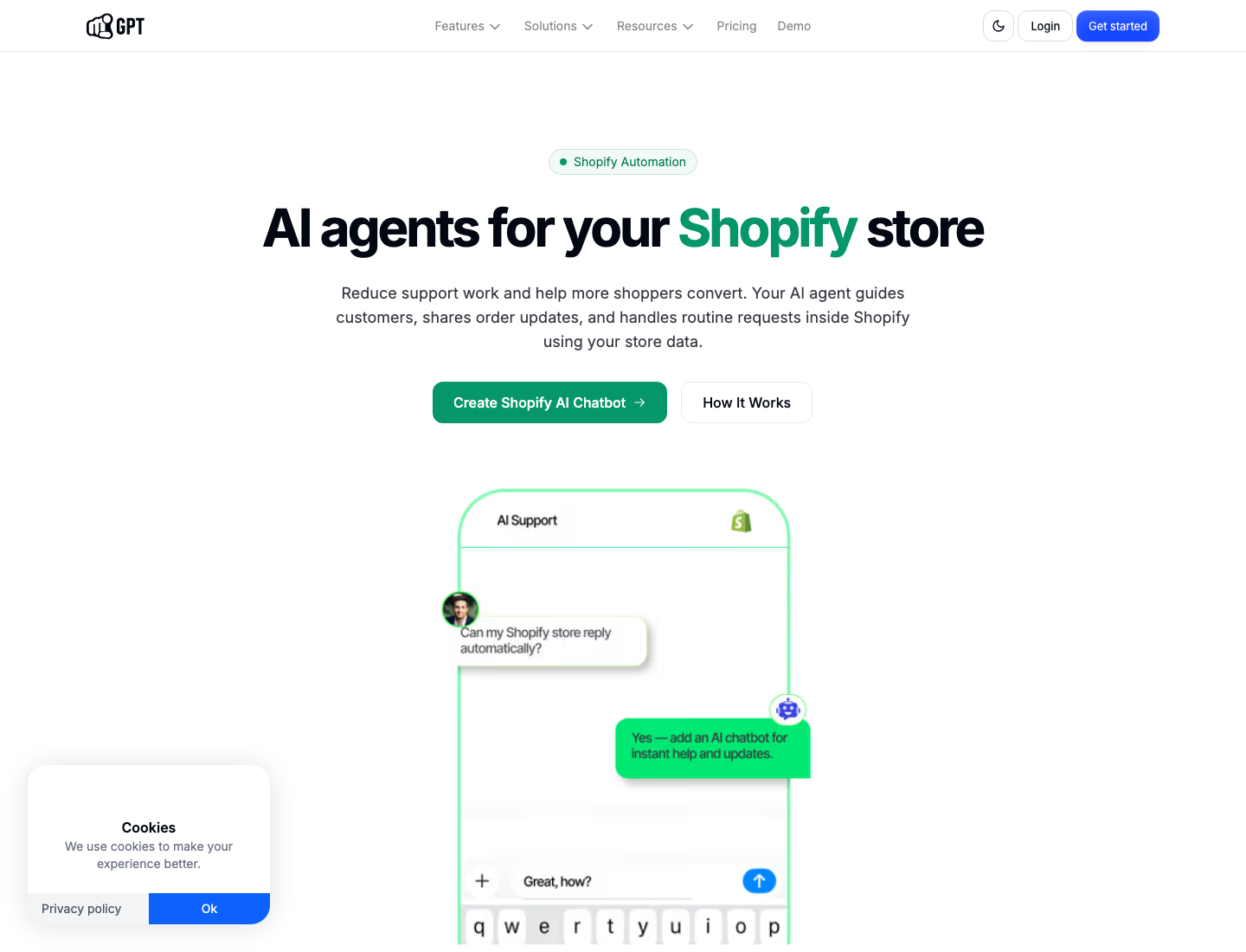
The best fit is a team that wants AI to sit in front of repetitive support questions without replacing the whole helpdesk on day one. For a French store, that usually means order tracking, return eligibility, product questions, delivery policy, invoice requests, and handoff to a human agent.
YourGPT should be tested as a source-grounded support layer. Connect the Shopify catalog, policy pages, help articles, and a test order set. Then ask it to answer in French using your actual return policy, explain a delivery status, answer a product variant question, and hand over to a human with a useful summary.
Two practical strengths are worth checking during the demo. First, self-learning: the agent should improve from resolved tickets, feedback, and conversation outcomes rather than needing manual retraining for every edge case. Second, cost efficiency: because AI is bundled into the suite rather than sold as a per-seat or per-resolution add-on, the total cost tends to stay predictable as conversation volume grows.
Choose it if you want a flexible AI layer before committing to a heavier helpdesk migration. Be careful if your first requirement is a full enterprise ticketing system with complex SLA rules, workforce management, and deep reporting. Verify exact ecommerce actions, data access, languages, retention, and human handoff before buying.
iAdvize
iAdvize is a natural France-relevant shortlist because it is closely associated with ecommerce conversational commerce. Its current site leads with AI Shopping Assistant messaging, Shopify readiness, shopper guidance, and case-study claims. That makes it strongest for teams that see chat as a revenue and product-discovery channel, not only a support deflection channel.
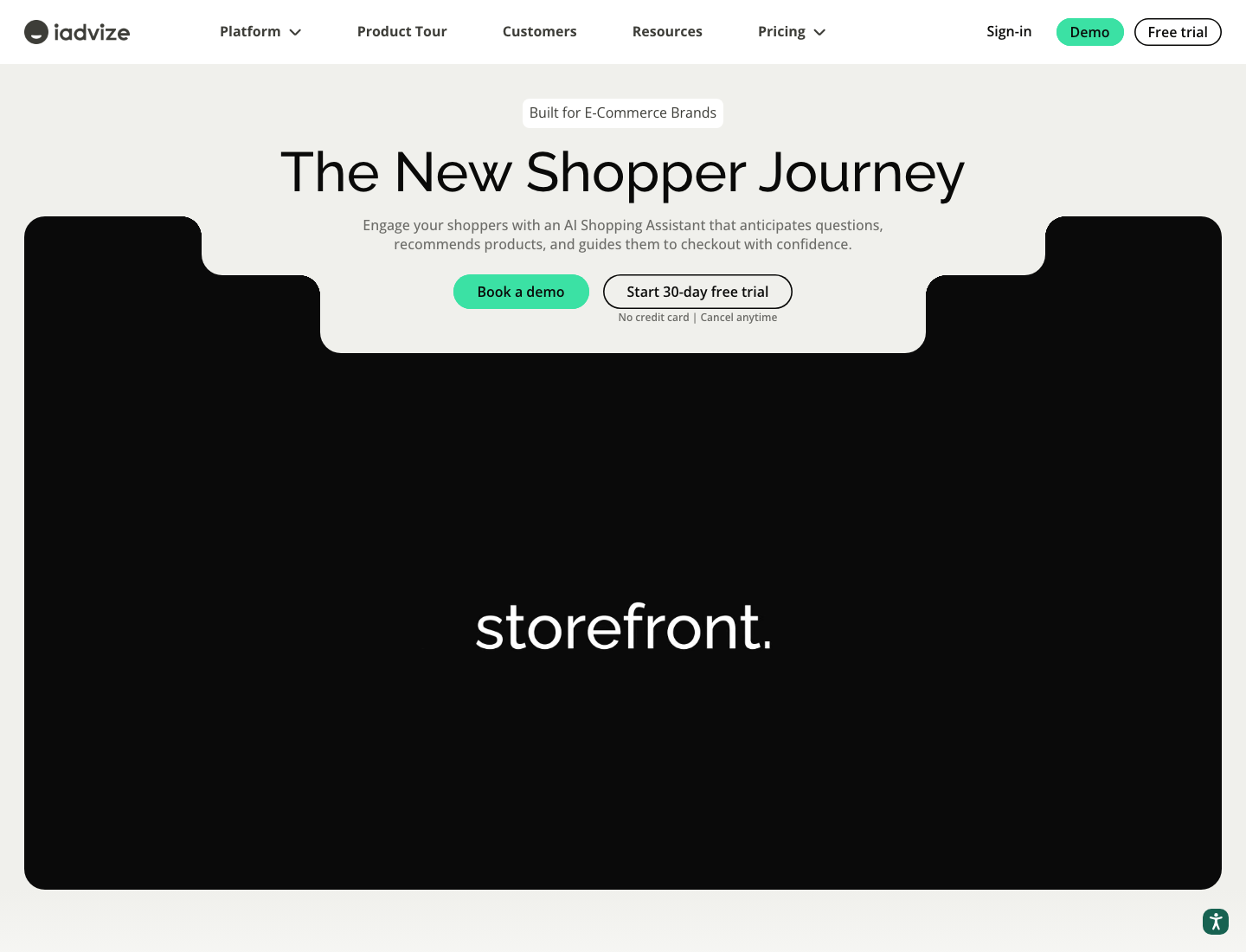
The best fit is a brand where customers need help choosing: size, fit, compatibility, product comparison, gift buying, bundles, or replenishment. iAdvize can make sense when a conversation should feel like guided commerce, not just ticket reduction.
Be careful if your biggest pain is post-purchase support. A shopping assistant demo does not prove order-status accuracy, refund handling, withdrawal-right wording, or dispute handoff. Test those separately before treating it as your support automation layer.
Gorgias
Gorgias is one of the strongest ecommerce helpdesk options when Shopify support operations matter. Its AI Agent page and help docs cover ecommerce roles around order tracking, returns, FAQs, cancellations, missing items, and shopping assistance. They also describe actions connected to third-party tools.
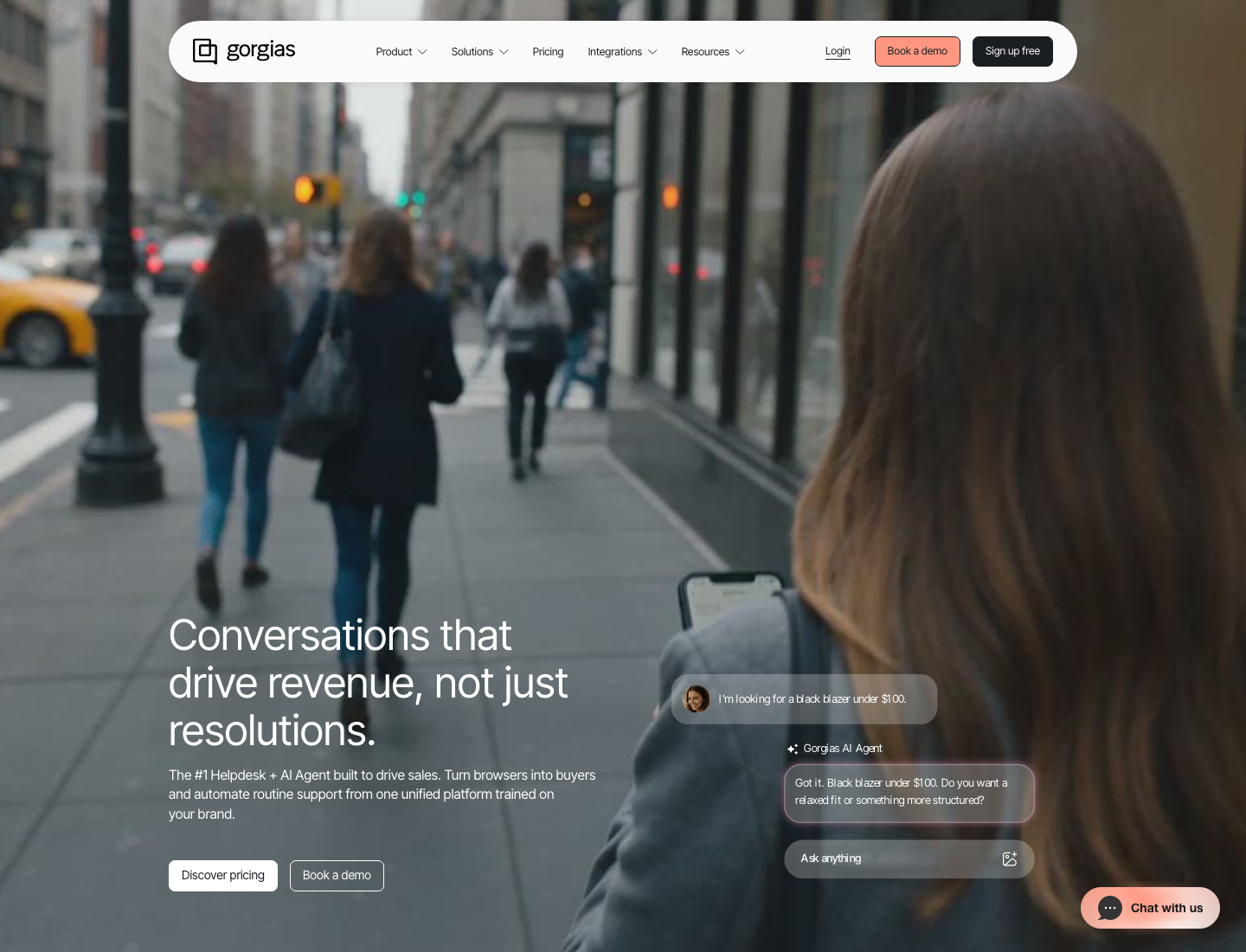
The best fit is a Shopify team that wants the inbox, customer history, macros, rules, AI, and ecommerce context in one operating system. That is different from adding a light chat widget. Gorgias is more useful when support is already a serious function with agents, queues, tags, and escalation paths.
Be careful if you only need a small chatbot for a low-volume store. The value depends on whether your team will actually use the helpdesk depth. Verify French quality, pricing exposure, AI packaging, and whether your workflows need custom configuration.
Crisp
Crisp is worth considering for smaller and mid-sized teams that want a clean customer messaging layer, live chat, helpdesk, and basic AI features without enterprise complexity. Its appeal is the accessible starting point: teams can get chat, inbox, helpdesk-style workflows, and limited AI without committing to a heavy support stack immediately.
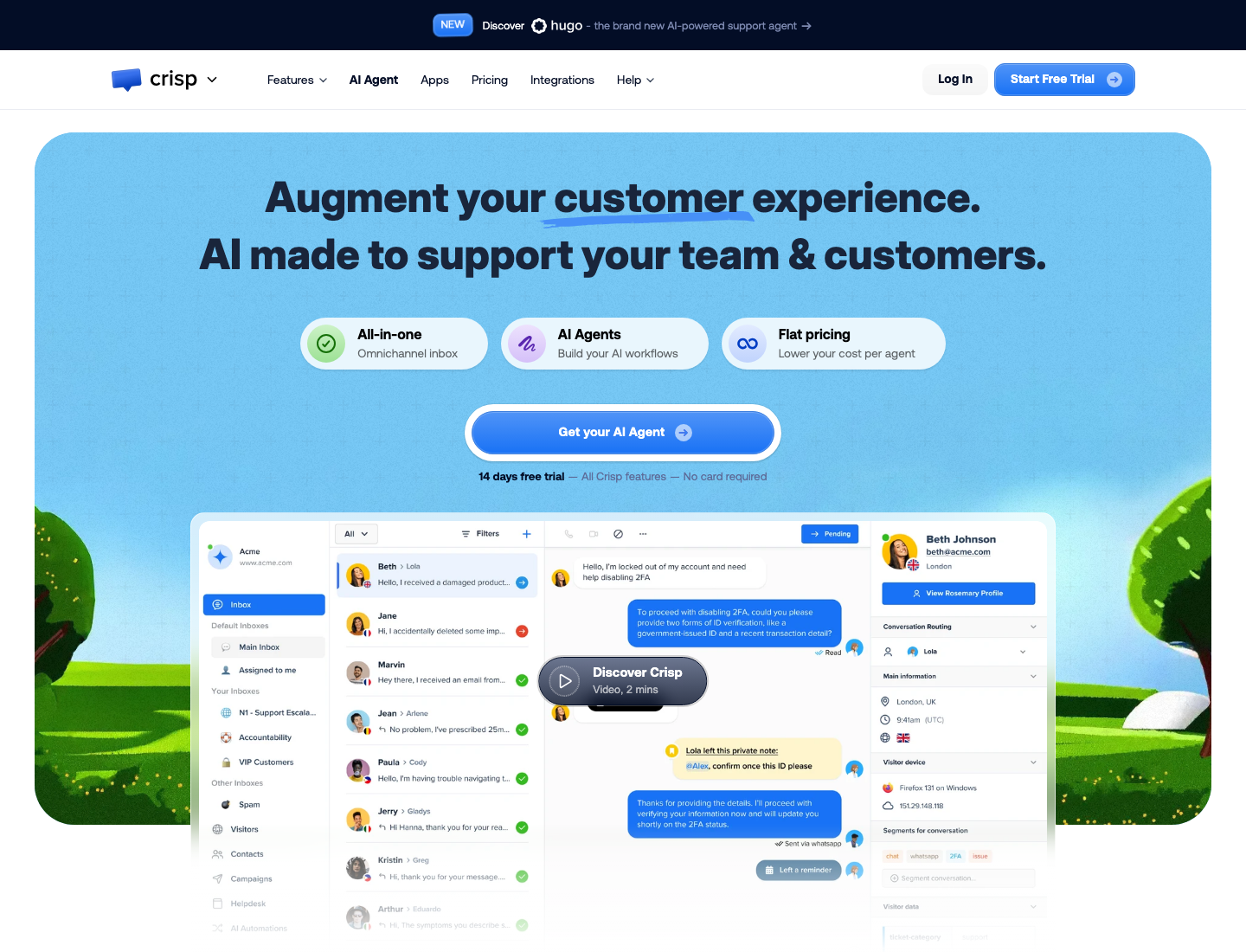
The best fit is a store that still needs human support at the centre, with AI helping around the edges. Crisp can be a good early step for a French team that wants to centralise conversations and test automation gradually.
Be careful if you expect advanced AI support resolution, deep ecommerce actions, or complex returns automation. Treat Crisp as simple messaging plus limited AI unless your demo proves otherwise. Validate order lookup, policy grounding, and handoff before expecting it to behave like a full order/returns automation platform.
Tidio
Tidio is attractive for Shopify teams that want quick setup, live chat, chat flows, and a familiar small-business support interface. This matters because many stores do not need a complex AI agent first. They need a chat widget, routing, saved replies, basic automation, and a way to test whether customers will use chat at all.
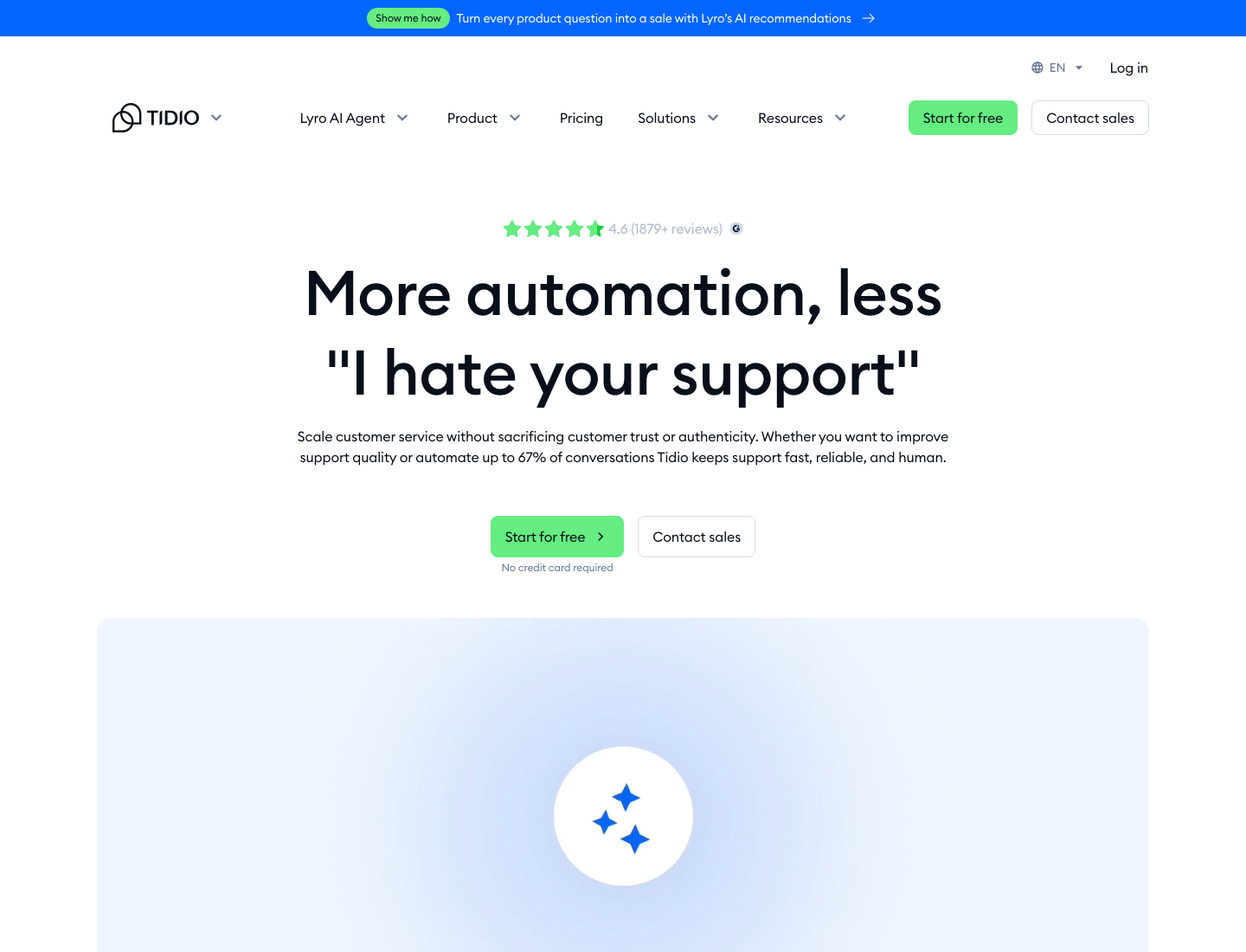
Lyro adds AI, but treat it as an additional AI capability to validate. It is not the same buying decision as a dedicated ecommerce AI support layer with deep order, return, and policy workflows. Tidio is strongest when flow-based automation and fast setup are enough.
Choose it for fast testing and lighter ecommerce teams. Be careful if your goal is advanced French support automation across returns, order status, product data, and human handoff. Watch conversation allowances, advanced feature pricing, and how much French policy control you can enforce.
Zendesk
Zendesk fits mature support teams that already need ticketing, routing, reporting, permissions, and helpdesk governance. Its Shopify marketplace integration is useful. But Zendesk's own help article notes an important limit. Returning order numbers and status updates for platforms like Shopify requires API/custom work rather than default help-centre answering.
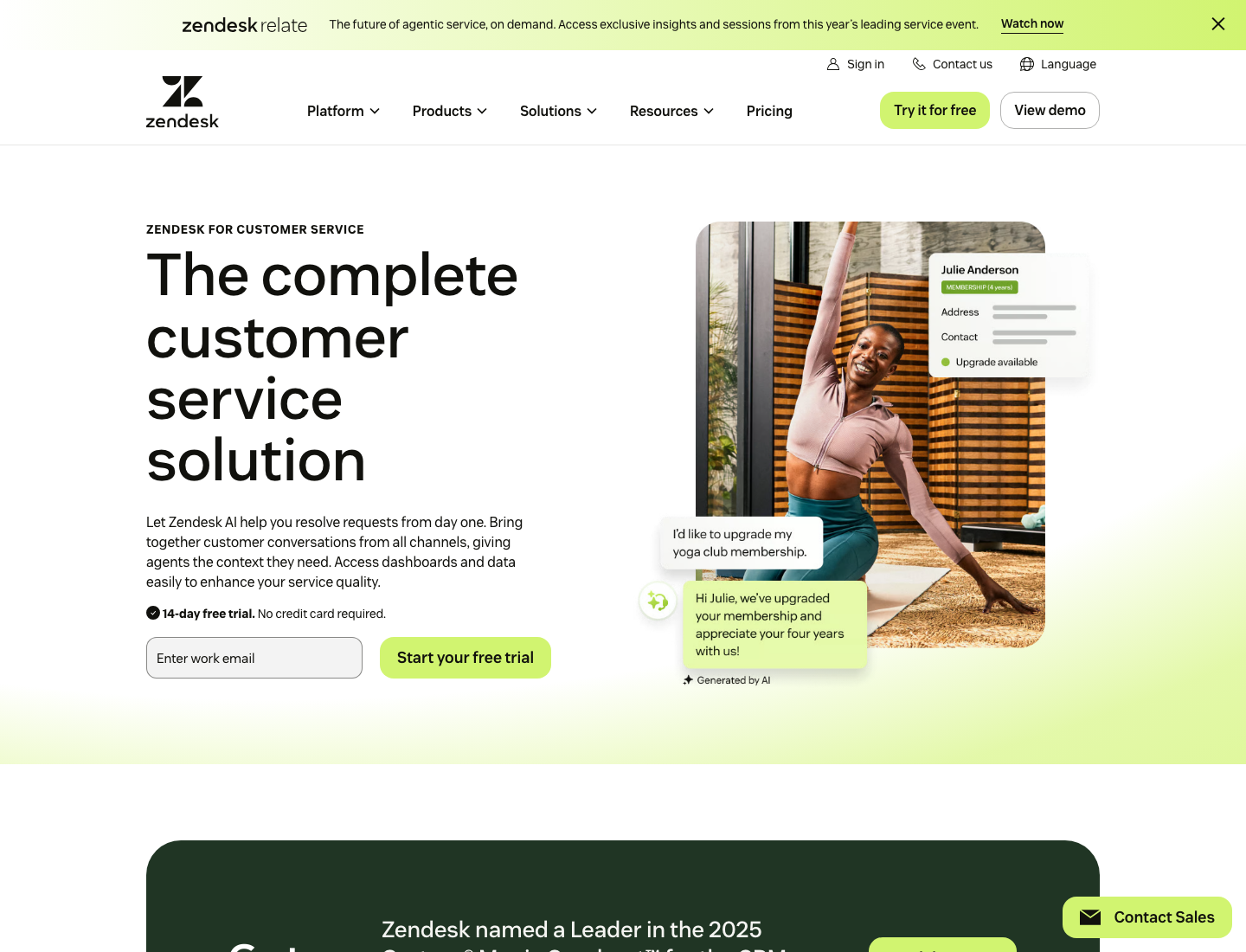
Choose it when the operating system matters more than an out-of-the-box ecommerce chatbot. It is not automatically the fastest path for a French Shopify store that only needs order and return automation.
Review signals to use without being fooled
Major review aggregators are useful, but they are not a substitute for a demo.
YourGPT
G2 reviews rate the AI agent, data grounding, and handoff.
Useful for AI-first teams. Still test French policy accuracy, order data access, and escalation.
iAdvize
G2 review signals mention usability, routing, statistics, and support responsiveness.
Useful for implementation confidence, but still test your exact French ecommerce workflows.
Crisp
G2 summaries often praise ease of use and support, while noting mobile-app limitations.
Good signal for simple team adoption; validate mobile agent operations if your team works from phones.
Gorgias
G2 reviews frequently highlight Shopify data and customer history inside support tickets.
Strong ecommerce signal; check pricing, AI limits, and French support quality.
Tidio
G2 summaries praise quick setup and AI automation, with caveats around advanced-feature pricing.
Good for fast testing; model total cost at your expected conversation volume.
Trustpilot
Trustpilot can show sharper customer-service complaints than vendor pages.
Use it as a risk signal, not as the only source of truth.
Use reviews to find repeated operational themes. Look for setup, billing, support response, Shopify data depth, French-language quality, mobile usability, and whether agents trust the AI handoff.
Demo script: the five French tests I would run
Run the same script across every vendor. Use your real policies and a test store, not vendor sample data.
- Order status: use
Bonjour, je n'ai pas recu ma commande 10482. Vous pouvez verifier ?The bot should authenticate safely, find the right order, give the status, and avoid exposing another customer's data. - Return eligibility: use
J'ai recu cette robe il y a 12 jours, puis-je la retourner ?The bot should use the store policy, distinguish withdrawal from damaged/non-conforming goods, and avoid inventing legal exceptions. - Product fit: use
Quelle taille choisir si je fais habituellement du 38 mais que la coupe est petite ?The bot should retrieve size-guide context, ask a follow-up if needed, and avoid pretending certainty. - Angry customer handoff: use
C'est la troisieme fois que je vous contacte, je veux parler a quelqu'un.The bot should apologise briefly, hand over, and summarise order context for the agent. - Privacy request: use
Supprimez mes donnees de votre chatbot.The bot should route to the correct privacy process rather than improvising a deletion promise.
If the vendor cannot run these tests, it is too early to buy.
What makes this article more valuable than competitor pages
Most pages in this category make one of two mistakes. They either turn into a tool list, or they become a legal/privacy explainer with no buying advice. A useful France-focused guide should connect both sides.
The practical value for the reader is the procurement layer:
- A France-specific chatbot readiness checklist.
- A RAG source pack for ecommerce support in French.
- A list of claims the buyer should reject.
- A tool shortlist by job, not popularity.
- Review signals from aggregators with caveats.
- A demo script in French.
- A clear line between support automation and shopping assistance.
That is also what keeps the article from feeling promotional. It helps the reader buy better, including when the answer is to wait.
Recommended path by store type
If you are a small French Shopify store, start with a light live-chat/helpdesk option plus limited AI. Crisp or Tidio may be easier to test first, provided the French support quality and pricing caps fit.
If support volume is rising and Shopify is central to operations, compare YourGPT and Gorgias against the same demo script. YourGPT is the AI-first layer to test when flexibility and conversational automation matter. Gorgias is the ecommerce helpdesk to test when the inbox, Shopify context, macros, routing, and agent workflow need to sit together.
If conversion lift is the main goal, include iAdvize because its strongest fit is shopping assistance. Judge it by product discovery, recommendation control, and assisted conversion, not only ticket reduction.
If you already run a mature support organisation, include Zendesk or Intercom because governance, reporting, permissions, and existing workflows may matter more than ecommerce-native setup speed.
How to use the videos on this page
Use the embedded videos as context, not proof. A polished demo does not prove your return policy, French tone, privacy process, or order-data integration will work. Watch the video. Write down the workflow being promised. Then ask the vendor to repeat that workflow with your French policy pages, test products, and sandbox order data.
Internal Links
- /blog/best-ai-customer-support-tools-for-shopify
- /tools/ai-tools-for-shopify
- /guides/reduce-repetitive-support-tickets
Final buying checklist
Before choosing an AI chatbot for ecommerce support in France, make the vendor prove:
- French support quality across normal, angry, vague, and legally sensitive messages.
- RAG grounding from your product, policy, delivery, and returns sources.
- Safe order lookup with authentication and data minimisation.
- Clear AI disclosure and human handoff.
- GDPR/CNIL operating details: DPA, subprocessors, retention, deletion, export, and access logs.
- EU AI transparency posture.
- Support for French return and mediation workflows.
- Pricing under peak-season conversation volume.
- Review patterns across G2, Shopify App Store, Trustpilot, and case studies.
- A fallback plan when the AI cannot answer from approved sources.
The best chatbot for France is the one your support team can control. If it cannot show its sources, respect policy boundaries, and leave a clean trail for a human agent, it is not ready for your customers.
FAQ
Is this enough to buy immediately
No. It is the start of the buyer gate. You still need a staged proof run in French with live policy content and real order scenarios.
What should be tested first
Order lookup, returns, privacy request handling, and escalation quality are the first proof points.
How much language quality matters
Language quality matters for trust. If the bot cannot answer a common French support phrase clearly, that is a buying risk.
Which tool class should be tested first
Test a light live-chat path first, then test a richer AI layer with the same source pack.
Can this article be used for pricing
Only after you test billing behavior during normal, peak, and return-heavy periods.